

Precision Rifle Gear for Competitive Shooting


Competitive precision shooting requires a blend of skill, strategy, and specialized equipment to achieve consistent accuracy at extended distances beyond the capabilities of standard iron sights. Precision rifle shooters must overcome the challenges of variable wind, positional changes, and time constraints, all while maintaining sub-minute of angle (MOA) accuracy. Precision Rifle Series (PRS) and National Rifle League (NRL) matches test your abilities through stages that simulate real-world scenarios, requiring gear that enhances stability and repeatability for accurate shot strings. Salmon River Armory, an Idaho-based manufacturer, specializes in precision firearm components, producing high-quality Arca Rails and Picatinny rails for the most popular bolt-action rifles on the market, such as the Ruger American Rifle and Savage 110, using precision machining processes. Their mission focuses on enhancing firearm performance with durable, field-tested components designed for hunters, precision shooters, and anyone who wants to upgrade their rifle for better stability and accuracy.
Understanding Rifle Competitions Like PRS & NRL
Precision Rifle Series competitions involve engaging targets at distances from as close as 100 yards out to beyond 1000 yards, often from unconventional positions like barricades, rooftops, or vehicles. Matches can last one or two days, with 8-12 stages per day, each limited to 90-120 seconds. You fire 8-12 rounds per stage, scoring based on impacts, with penalties for misses.
NRL events follow a similar format but emphasize hunter-style scenarios, including team-based stages where you locate, range, and engage hidden targets within four to six minutes. These competitions push the shooter on their skills in adaptability, as you need to adjust for wind holds, elevation doping, and positional stability. Long-range shooting gear plays a major role in your success, enabling quick transitions and consistent groupings.
Competition Types and Categories
PRS is divided into Open, Tactical, and Production divisions. Open allows custom rifles with no restrictions, Tactical limits optics to 16x magnification and calibers to 5.56mm or .308 Winchester, and Production caps rifle costs at a certain limit for factory models.
NRL offers similar categories, plus a Hunter division focused on field skills. Competitive marksmanship in these events require rifle setups that balance weight and maneuverability without sacrificing long-distance accuracy. To achieve this balance, shooters incorporate aftermarket upgrades like premium Arca Rails from Salmon River Armory, utilizing these rails to quickly and efficiently attach and detach bipods and tripods during courses of fire.
What the Pros Use: Competition Gear Insights
Top PRS and NRL shooters rely on gear that provides them with consistency and stability. Surveys of the top 200 competitors show a heavy preference for custom actions from brands like Impact Precision or Zermatt Arms, paired with barrels from Proof Research or Bartlein. Chassis systems from MDT or MPA are widely used, offering shooters adjustable ergonomics and accessory-mounting compatibility.
What Caliber is Best for Precision Rifles for Competitions?
Popular rifle calibers have shifted over the years, from heavier bullets to smaller, flatter shooting calibers. The 6mm Dasher is currently at the top of the list with professional shooters, given its flat trajectory and much lower recoil than more common .30 caliber rounds. The 6.5 Creedmoor has also remained a very popular round to defeat wind resistance and its ever-increasing popularity and availability. Emerging .25 calibers, like the 25 Creedmoor or 25x47 Lapua, have grown in use to nearly match 6mm options, offering higher ballistic coefficients for distances around 1,000 yards.
Optics and Glass: Choosing Competition Scopes
Scopes from Vortex, Nightforce, Leupold, and Zeiss have been the top choice for competitors, with 5-25x or 6-36x magnification used for its ability to clearly see at extreme distances. Most of these scopes are available with several different reticle options, giving you the option of choosing which works best for you and your shooting needs. These scopes can have illuminated reticles to use during low-light shooting stages. For distance shooting and engaging targets at variable ranges, a first focal plane reticle is your best option for making quick adjustments on the fly.
Bipods, Bags, and Support Equipment
Atlas, MDT, and Harris bipods are very commonly used during PRS and NRL matches. Most models come with attachment capabilities for multiple mounting options, but the most common are with Arca Rail or Picatinny systems. These bipod brands integrate effortlessly with the Salmon River Armory Arca Rails or Picatinny rail systems. Comparatively, a Picatinny bipod mount gives you fixed positions for tactical stability, while Arca allows you to slide the bipod fore and aft to dial in your rifle’s balance point in precision setups. Bags from Armageddon Gear or Wiebad give shooters multiple options for support and stabilization. Bags can be used as a rear bag underneath the buttstock of the rifle or can be thrown onto a barricade during stages that require them.
Other Accessories
Other precision rifle competition accessories can include Kestrel 5700 ballistics meters for measuring wind, weather conditions, and altitude. The data provided gives you the information needed to factor in all the variables you cannot see but have the greatest impact on your shot once you pull the trigger. Rangefinders from brands like Sig Sauer or Vortex allow you to accurately measure target distance with precision, well beyond what most shooters can do with a rifle scope’s reticle.
Building Your First Competition Rifle Setup
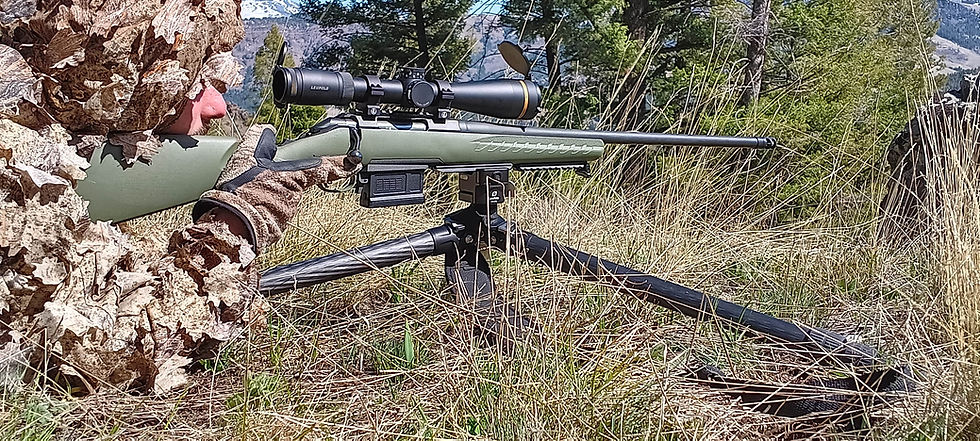
When assembling your initial competition rifle, begin with a factory platform such as the Tikka T3x, Ruger American Rifle, or Savage 110. These rifles are priced for entry-level shooters who want to get into the sport without spending thousands of dollars to do it. These options are plenty accurate for newer and even experienced shooters. You can buy an aftermarket chassis system for your rifle, but that can cost anywhere from $500-1500. A simple first upgrade would be to purchase an Arca Rail or Picatinny rail from Salmon River Armory and install that with ease, giving you an immediate custom rifle feel without breaking the bank when starting out. This easy upgrade gives you stability during positional changes, a major factor in PRS stages where you rapidly shift from prone to barricade positions.
Once you become comfortable with your rifle, but you want to upgrade further, consider swapping out your factory barrel for a match-grade barrel from companies like Proof Research or Bartlein. These barrels are available in a multitude of different calibers and profiles, so finding one to fit your Ruger American or Savage 110 will be an easy swap. Find the right twist rate for your specific caliber and bullet weight, and you now have premium accuracy at distance without the high price tag of a full custom build.
Your setup will evolve over time until you find what works best for your style of shooting. It is best to start with the basics and grow from there. Your match results and feedback are your best measure of what you need to fix, change, and practice on before your next competition.
Final Thoughts on Precision Rifle Competition Gear
Getting into competitive precision shooting is all about having the right gear and equipment that fits your shooting and performs when it counts, whether you're shooting stages in PRS or NRL events. Your setup needs to handle everything from steady holds in tricky positions to managing recoil for quick follow-up shots. Find the right caliber that shoots flat and predictably, scopes with clear reticles for fast adjustments, and supports like bipods or rails that keep things stable without weighing you down. Upgrades to factory rifles from Salmon River Armory can give you a head start in building out your custom precision rifle while leaving you enough money left over to get some more ammo and get to the range to train.


Comments