

Everything You Need to Know About Picatinny Rails: The Ultimate Mounting Guide


Picatinny rails are the benchmark in the world of firearm customization, delivering a reliable and standardized method for attaching a wide variety of accessories, including optics, lights, bipods, and foregrips. If you are a rifle builder looking to optimize your setup, a hunter looking to enhance functionality in the field, or a precision shooter striving for consistent performance, understanding Picatinny rails becomes essential.
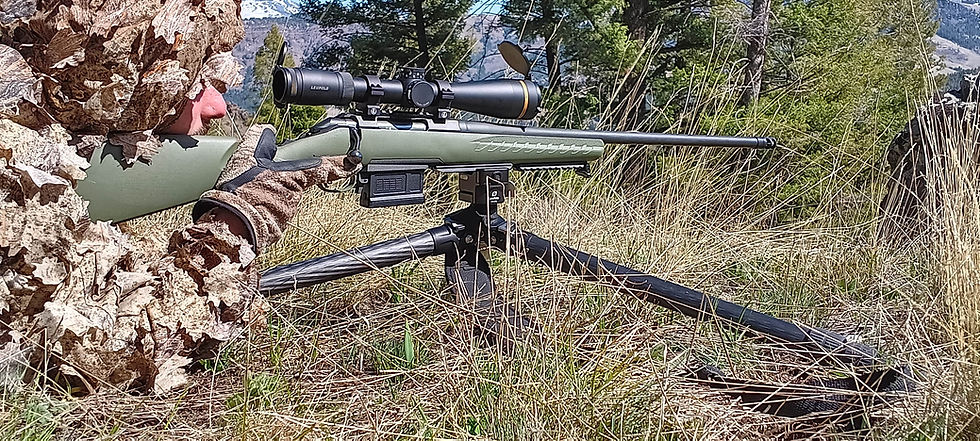
This comprehensive Picatinny rails guide goes into the system's origins, technical specifications, key differences from other mounting options, step-by-step installation processes, and common errors to avoid. Salmon River Armory manufactures precision rifle rails and components in Idaho, that combines durability with lightweight design. Their rails cater to specific models like the Ruger American and Savage 110, providing easy integration and long-term reliability.
What Is a Picatinny Rail?
A Picatinny rail is a raised metal bar with a series of evenly spaced transverse slots, designed to be mounted on a firearm's receiver, handguard, or forend to create a space for the attachment of accessories.
This system originated in the early 1990s at the Picatinny Arsenal in New Jersey, where engineers sought to create a versatile mounting solution for military applications. The U.S. Department of Defense formalized it as MIL-STD-1913 in 1995, establishing it as a global standard for accessory interfaces on firearms.
The rail's distinctive hexagonal cross-section includes slots that function as recoil lugs, each measuring 0.206 inches in width, with centers spaced precisely at 0.394 inches and a depth of 0.118 inches. This exact slot spacing enables accessories to lock into place consistently, allowing them to be removed and reinstalled without losing their zero or alignment. To attach an item, you slide it onto the rail and secure it with crossbolts or clamping mechanisms that engage the slots, providing resistance against rearward forces generated by the firearm’s recoil.
Practical Uses for Picatinny Rails
Picatinny rails accommodate an extensive range of attachments, from high-powered scopes and red dot sights to weapon mounted lights, lasers, and vertical grips. For a precision shooter upgrading a rifle, this versatility means installing a variable-zoom optic that remains stable during extended-range shots, ensuring repeatable accuracy.
The rail's construction typically uses high-strength materials such as 6061-T6 aluminum or steel, often finished with anodizing or Cerakote to protect against environmental wear like moisture, dust, and impacts.
For hunters adding accessories, a Picatinny rail simplifies the process of mounting a bipod or scope, improving stability and target acquisition during early morning or dusk hunts. Tactical users outfitting mission kits rely on the rail's capacity to handle substantial weights, such as thermal imaging devices, without compromising structural integrity. Gunsmiths advising clients frequently utilize Picatinny rails for their rigidity and wide adoption as it withstands the rigors of field use better than less standardized alternatives.
Salmon River Armory crafts their Picatinny rails, employing advanced CNC machining to achieve tolerances within 0.001 inches. Their models weigh just a few ounces and incorporate practical features like built-in sling attachment points. This level of engineering ensures the rail not only meets but exceeds MIL-STD-1913 requirements, delivering performance whether at the shooting range or in remote backcountry locations.
Why Was Picatinny Necessary?
From a historical perspective, the Picatinny rail addressed limitations in prior systems, which lacked standardization and often led to compatibility issues among different manufacturers. It also aligns with the NATO-STANAG rail protocols, fostering equipment interoperability among allied forces.
You encounter Picatinny rails on diverse platforms, including semi-automatic AR-15 variants, bolt-action hunting rifles, and even shotguns, where they enable modular enhancements without requiring permanent modifications to the firearm.
The physical dimensions include an overall rail width of 0.835 inches and a height of 0.206 inches above the mounting surface, which provides clearance for optics and prevents interference with the function of the weapon system.
The number of slots on a rail varies based on its length, a compact 3-slot rail might suffice for a simple bipod attachment, while a full-length quad rail on a carbine handguard could feature 20 or more slots to support multiple devices simultaneously. Additionally, some Picatinny rails include cantilever designs that extend forward from the receiver, optimizing eye relief for scopes on rifles with shorter stocks.
Picatinny rails function as a durable, adaptable foundation that allows you to customize your firearm effectively, supporting a wide spectrum of shooting activities from casual plinking to professional operations.
Picatinny vs Weaver vs NATO
Picatinny rails have surpassed the utility of Weaver and NATO-STANAG through their stringent specifications, broad compatibility, and rugged utility. The Weaver rail, invented by William Weaver in the 1950s, uses narrower slots of 0.180 inches without mandatory spacing or depth standards, leading to potential inconsistencies across brands.
As a result, Weaver-compatible accessories can generally mount on Picatinny rails due to the wider slots, but Picatinny-specific items may not fit Weaver rails reliably. This one-way compatibility makes Picatinny more versatile for modern applications, where precise recoil lug engagement prevents slippage under high-stress conditions, whereas Weaver remains viable for lighter, recreational setups.
NATO-STANAG rails, outlined in STANAG 4694 from 2009, refine the MIL-STD-1913 framework with tighter tolerances and an optional dovetail base for faster attachment to weapon receivers. While fully backwards compatible with Picatinny, the key difference lies in endurance.
NATO designs prioritized long-term reliability in military operations, but Picatinny dominates civilian and commercial sectors for its straightforward implementation and cost-effectiveness. Tactical users might prefer NATO for mission kits where equipment sees extreme abuse, yet Picatinny suffices for all civilian use with equivalent functionality.
In detailed comparisons, Picatinny's battle-tested toughness outperforms Weaver in sustained fire situations, where slot wear could occur. NATO's enhancements provide marginal gains in longevity for harsh deployments, but Picatinny's accessibility keeps it prevalent, making it the go-to for general-purpose versatility.
Choosing the Right Rail for Your Rifle
Choosing the appropriate Picatinny rail requires evaluating factors like length, material composition, firearm compatibility, and your primary use case to ensure optimal performance.
Rail lengths span from compact 3-inch segments ideal for single-accessory mounts, such as a forward bipod on a hunting rifle, to extended 15-inch or longer versions that cover full handguards for fully modular setups. Shorter rails help maintain a low weight profile, which is crucial for hunters who prioritize mobility during long treks, while longer rails support tactical configurations with space for lights, lasers, and grips.
Material selection plays a pivotal role in balancing strength and portability. Aluminum rails, often 6061-T6 alloy, deliver excellent corrosion resistance through anodizing and keep weights minimal, typically 2-6 ounces depending on size, making them suitable for precision shooters who need to avoid unnecessary bulk. Steel rails provide enhanced rigidity and recoil lug durability for high-caliber firearms, though they add more mass, which could fatigue users in extended field operations.
You must consider your rifle's overall balance; lighter aluminum prevents front-heaviness on scoped setups, while steel ensures no deformation under extreme loads.
Salmon River Armory’s picatinny rail segments are model specific mounting systems designed to complement their half or full length Arca rails, adding additional accessory mounting compatibility and flexibility.
Weighing just a few ounces, these rails are machined from premium 6061-T6 aluminum, have integrated sling swivel attachment points and finished with a durable Cerakote finish. Like all of Salmon River Armory’s products, they can be installed in minutes by just about anyone with the provided tools and hardware.
Installation & Torque Instructions
Proper installation of a Picatinny rail requires the right tools and methodical steps to achieve a secure, vibration-resistant mount. You will need a torque wrench calibrated in inch-pounds, Allen keys or screwdrivers matching your hardware, blue threadlocker for vibration resistance, and a degreaser such as acetone or isopropyl alcohol. If working on a stocked rifle, remove the barreled action to access the forend safely, ensuring the firearm is unloaded and cleared.
Start by cleaning the mounting surface and rail base thoroughly with degreaser to remove oils or residues that could impede adhesion. Position the rail carefully, aligning its holes with those on the receiver or stock.
If the surfaces don't mate perfectly due to curvature, use thin shims or bedding compound to fill the voids and prevent stress points.
Apply a small amount of threadlocker to each screw's threads, then insert them through the rail into the firearm. Tighten in a cross-pattern or from the center outward to distribute pressure evenly, beginning at a low torque of 5-10 inch-pounds and gradually increasing to the recommended specs. For aluminum receivers, aim for 15-20 inch-pounds to avoid stripping; steel can handle 20-25 inch-pounds. Over-tightening risks damaging threads or warping the rail, while under-tightening allows loosening over time.
Salmon River Armory includes detailed instructions with their rails, specifying 15 inch-pounds for synthetic stocks to balance security with material integrity. Their kits come with drill templates if modifications are required for model-specific fits.
After installation, conduct a function test by attaching an accessory and performing dry-fire cycles, followed by live-fire validation at the range to check for zero retention. If installing on free-floating handguards, remove retaining pins, slide the rail into position, and torque to the manufacturer's guidelines.
Maintenance & Longevity
Effective maintenance routines extend the service life of Picatinny rails, preserving their precision and reliability. Begin with routine inspections after every 200-500 rounds or field outing, checking for loose screws, slot wear, or surface damage. Use a torque wrench to verify fastener tightness, retightening to specs if needed.
Cleaning
Cleaning involves brushing out slots with a nylon tool to dislodge fouling, carbon buildup, or dirt, followed by a solvent wipe-down. Avoid abrasive cleaners that could scratch finishes. Use gun-specific products like CLP for lubrication and protection. Apply a thin oil film to threads and edges annually to ward off rust, but refrain from over-oiling, as it attracts contaminants.
Longevity
For longevity in harsh environments, monitor for corrosion: anodized or Cerakote coatings on quality rails like those from Salmon River Armory offer superior resistance, but inspect high-wear areas like slot lips for chipping. If bedding is used, examine the epoxy for cracks or separation, reapplying if necessary.
Storage
Store rails in padded cases during transport to prevent dings and avoid stacking heavy gear on top. For hunters exposed to moisture, dry thoroughly after rain and apply silicone-based protectants. Salmon River Armory's rails, with their durable coatings, will only require minimal inspection. Tactical users should clean after salt-air exposures, while precision shooters need to keep slots clean for optic stability.
Why Choose Salmon River Armory
Salmon River Armory sets the standard in the rail market through their commitment to American made production in Salmon, Idaho, where they craft components with precision engineering.
Their Picatinny rails fully comply with MIL-STD-1913, utilizing premium 6061-T6 aluminum for a balance of strength and minimal weight, often under 4 ounces per unit, to suit lightweight builds without sacrificing durability.
Built for popular models like the Ruger American and Savage 110, these rails feature contoured bases for gap-free installation, reducing vibration transfer and enhancing accuracy.
Common Mistakes
Over-torquing screws ranks among the most frequent errors, leading to stripped threads or cracked stocks, always adhering to specified limits with a proper wrench. Neglecting surface preparation, such as skipping degreasing, results in poor adhesion and eventual loosening; clean carefully to ensure your rail attaches without issue.
Misalignment during placement introduces cant, skewing optics and affecting accuracy. Use levels or sighting tools for verification. Overlooking compatibility checks can cause ill-fitting accessories; confirm slot dimensions match your items before mounting. Forgetting to apply threadlocker exposes fasteners to vibration, which can loosen during sustained strings of fire.
Final Thoughts
Picatinny rails have become the standard bearer for mounting accessories on nearly all firearms, from precision rifles to handgun rails. Knowing the essential aspects of this rail system, including selection based on length, material, and compatibility, you can now begin to customize your rifle’s accessory components.
Whether you're a precision shooter fine-tuning a competition rifle, a hunter getting ready for the field, or a gunsmith building a custom rifle, Picatinny rails provide the reliability needed for secure accessory mounting and consistent performance across all platforms. Salmon River Armory's American-made rails are designed to be your premium option when it comes to attaching anything you need to your rifle. Upgrade your setup today with Salmon River Armory.


Comments